
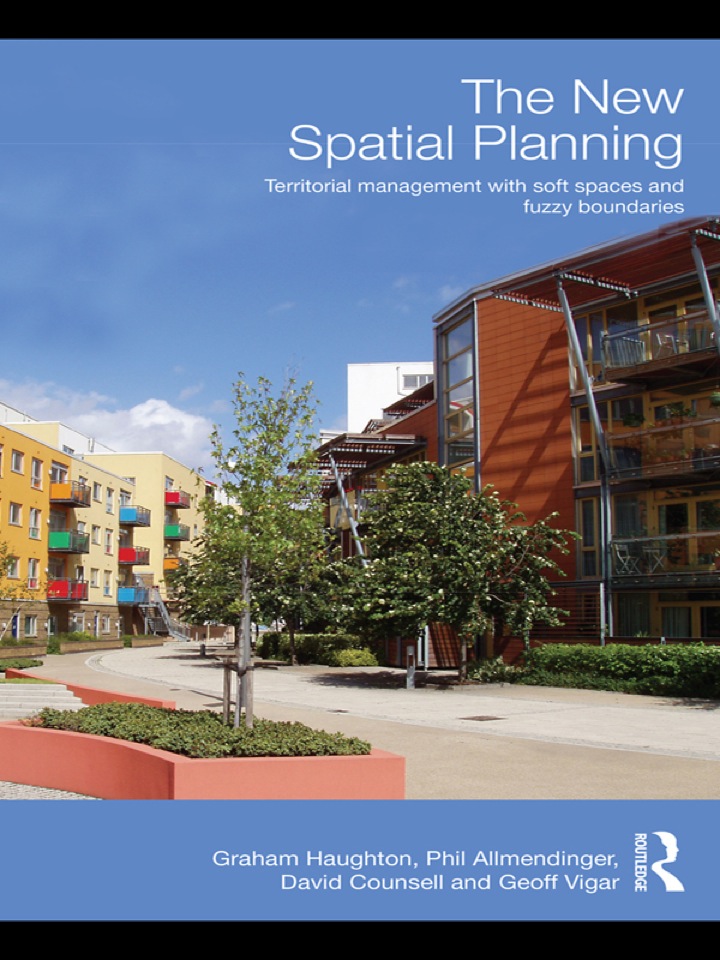
The New Spatial Planning: Territorial Management with Soft Spaces and Fuzzy Boundaries
$21.00
Spatial planning, strongly advocated by government and the profession, is intended to be more holistic, more strategic, more inclusive, more integrative and more attuned to sustainable development than previous approaches. In what the authors refer to as the New Spatial Planning, there is a fairly rapidly evolving maturity and sophistication in how strategies are developed and produced. Crucially, the authors argue that the reworked boundaries of spatial planning means that to understand it we need to look as much outside the formal system of practices of?planning? as within it. Using a rich empirical resource base, this book takes a critical look at recent practices to see whether the new spatial planning is having the kinds of impacts its advocates would wish. Contributing to theoretical debates in planning, state restructuring and governance, it also outlines and critiques the contemporary practice of spatial planning. This book will have a place on the shelves of researchers and students interested in urban/regional studies, politics and planning studies.Additional ISBNs9780415483360, 9780203864425, 9786612443466, 9781282443464, 9781135210748, 9781135210793The New Spatial Planning: Territorial Management with Soft Spaces and Fuzzy Boundaries 1st Edition is written by Graham Haughton; Philip Allmendinger; David Counsell; Geoff Vigar and published by Routledge. ISBNs for The New Spatial Planning are 9781135210786, 1135210780 and the print ISBNs are 9780415483353, 0415483352. Additional ISBNs include 9780415483360, 9780203864425, 9786612443466, 9781282443464, 9781135210748, 9781135210793.
Be the first to review “The New Spatial Planning: Territorial Management with Soft Spaces and Fuzzy Boundaries”
Related products






Reviews
There are no reviews yet.