
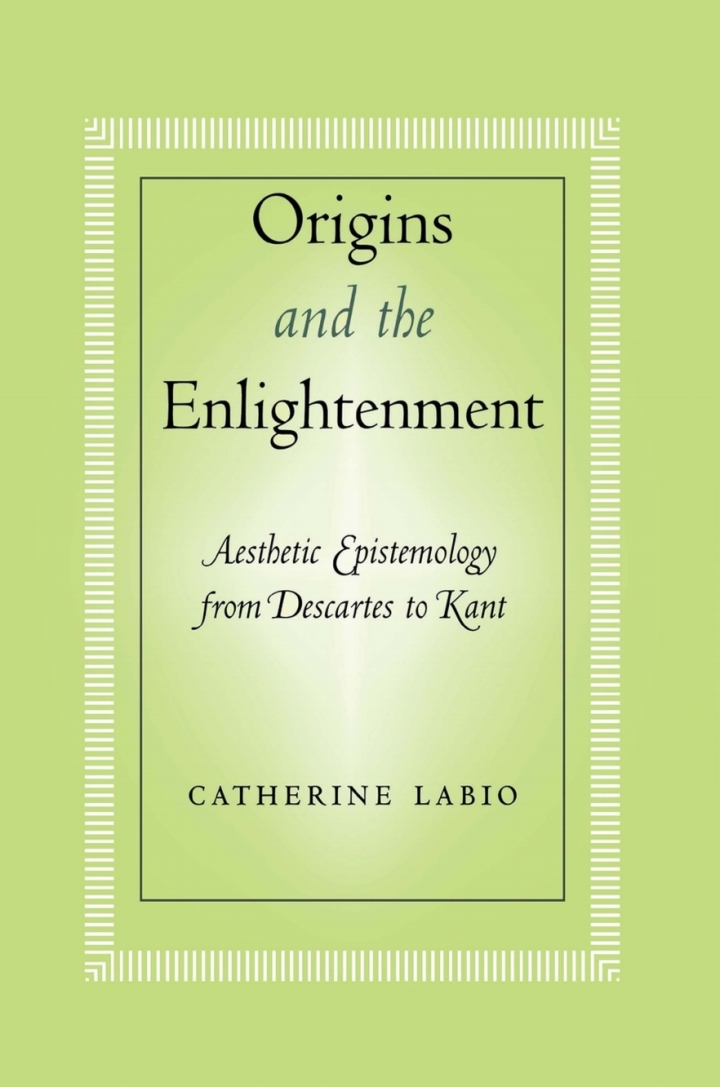
Origins and the Enlightenment: Aesthetic Epistemology from Descartes to Kant
$90.00
What epistemic assumptions framed eighteenth-century thinkers’ speculations regarding origins? What, if anything, connected these speculations? The best way to understand the Enlightenment’s obsession with origins is to study it in conjunction with the contemporary conceptualization of originality as a criterion of aesthetic value, Catherine Labio maintains.Her expansive survey of the era’s thought places special emphasis on epistemology and is genuinely interdisciplinary, drawing on such fields as anthropology, geometry, historiography, literary criticism, and political economy.One of the most striking facets of Enlightenment thought, according to Labio, is the emergence of aesthetics as a master discourse that enabled its users to make sense of worlds ostensibly unrelated to the arts. In particular, once knowledge became defined as knowledge of things made by human beings, originality became valued not only for its novelty but also as a guarantee of epistemological certainty.Labio analyzes the views held by a variety of European thinkers�including Baumgarten, Condillac, Descartes, Kant, Locke, Rousseau, Adam Smith, Vico, and Edward Young�on the origins of ideas, languages, nations, nature, and wealth. Throughout, the author deals with a wide range of primary and secondary materials.Origins and the Enlightenment: Aesthetic Epistemology from Descartes to Kant is written by Catherine Labio and published by Cornell University Press. ISBNs for Origins and the Enlightenment are 9781501727436, 1501727435 and the print ISBNs are 9780801442759, 0801442753.
Be the first to review “Origins and the Enlightenment: Aesthetic Epistemology from Descartes to Kant”
Related products



New Arrivals

New Arrivals


New Arrivals
New Arrivals
Reviews
There are no reviews yet.