
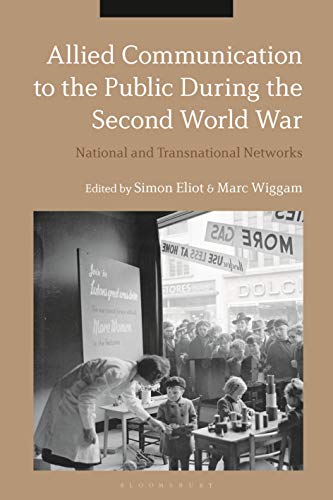
Allied Communication to the Public During the Second World War: National and Transnational Networks
$36.22
In the Second World War, the home fronts of many countries became as important as the battle fronts. As governments tried to win and hold the trust of domestic and international audiences, communication became central to their efforts. This volume offers cutting-edge research by leading and emerging scholars on how information was used, distributed and received during the war. With a transnational approach encompassing Germany, Iberia, the Arab world and India, it demonstrates that the Second World War was as much a war of ideas and influence as one of machines and battles.Simon Eliot, Marc Wiggam and the contributors address the main communication problems faced by Allied governments, including how to balance the free exchange of information with the demands of national security and wartime alliances, how to frame war aims differently for belligerent, neutral and imperial audiences and how to represent effectively a variety of communities in wartime propaganda. In doing so, they reveal the contested and transnational character of the ways in which information was conveyed during the Second World War.Allied Communication during the Second World War offers innovative and nuanced perspectives on the thin border between information and propaganda during this global war and will be vital reading for World War II and media historians alike.
Be the first to review “Allied Communication to the Public During the Second World War: National and Transnational Networks”
Related products


Ebook New zetlly

Ebook New zetlly
Russia, NATO and Cooperative Security: Bridging the Gap (Contemporary Security Studies)
Ebook New zetlly

Ebook New zetlly


Ebook New zetlly
The Changing Room: Sex, Drag and Theatre (Gender in Performance)
Allied Communication to the Public During the Second World War: National and Transnational Networks
$36.22
In the Second World War, the home fronts of many countries became as important as the battle fronts. As governments tried to win and hold the trust of domestic and international audiences, communication became central to their efforts. This volume offers cutting-edge research by leading and emerging scholars on how information was used, distributed and received during the war. With a transnational approach encompassing Germany, Iberia, the Arab world and India, it demonstrates that the Second World War was as much a war of ideas and influence as one of machines and battles.Simon Eliot, Marc Wiggam and the contributors address the main communication problems faced by Allied governments, including how to balance the free exchange of information with the demands of national security and wartime alliances, how to frame war aims differently for belligerent, neutral and imperial audiences and how to represent effectively a variety of communities in wartime propaganda. In doing so, they reveal the contested and transnational character of the ways in which information was conveyed during the Second World War.Allied Communication during the Second World War offers innovative and nuanced perspectives on the thin border between information and propaganda during this global war and will be vital reading for World War II and media historians alike.Product details Publisher: Bloomsbury Academic; 1 edition (November 14, 2019) Publication Date: November 14, 2019
Reviews
There are no reviews yet.
Be the first to review “Allied Communication to the Public During the Second World War: National and Transnational Networks”
Related products
Ebook New zetlly

Ebook New zetlly
The Oxford Handbook of Financial Regulation (Oxford Handbooks)

Ebook New zetlly
Ebook New zetlly
The Changing Room: Sex, Drag and Theatre (Gender in Performance)



Ebook New zetlly
Reviews
There are no reviews yet.