
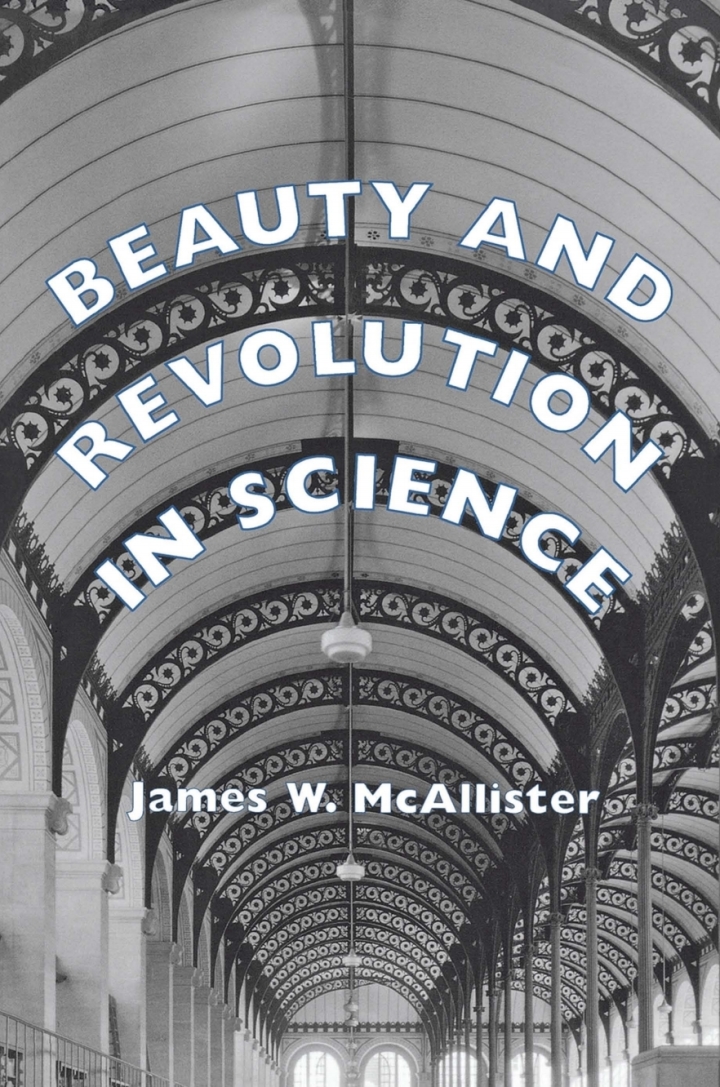
Beauty and Revolution in Science
$90.00
How reasonable and rational can science be when its practitioners speak of “revolutions” in their thinking and extol certain theories for their “beauty”? James W.Mc Allister addresses this question with the first systematic study of the aesthetic evaluations that scientists pass on their theories.P. A. M. Dirac explained why he embraced relativity by saying, “It is the essential beauty of the theory which I feel is the real reason for believing in it.” Dirac’s claim seems to belie rationalist accounts of science. Using this and a wealth of other historical examples, Mc Allister explains how scientists’ aesthetic preferences are influenced by the empirical track record of theories, describes the origin and development of aesthetic styles of theorizing, and reconsiders whether simplicity is an empirical or an aesthetic virtue of theories.Mc Allister then advances an innovative model of scientific revolutions, in opposition to that of Thomas S. Kuhn. Three detailed studies demonstrate the interconnection of empirical performance, beauty, and revolution. One examines the impact of new construction materials on the history of architecture. Another reexamines the transition from the Ptolemaic system to Kepler’s theory in planetary astronomy, and the third documents the rise of relativity and quantum theory in the twentieth century. Additional ISBNs 0801486254, 9780801486258Beauty and Revolution in Science is written by James W. Mc Allister and published by Cornell University Press. ISBNs for Beauty and Revolution in Science are 9781501728648, 1501728644 and the print ISBNs are 9780801432408, 0801432405. Additional ISBNs include 0801486254, 9780801486258.
Be the first to review “Beauty and Revolution in Science”
Related products
New Arrivals


New Arrivals

New Arrivals




Reviews
There are no reviews yet.