
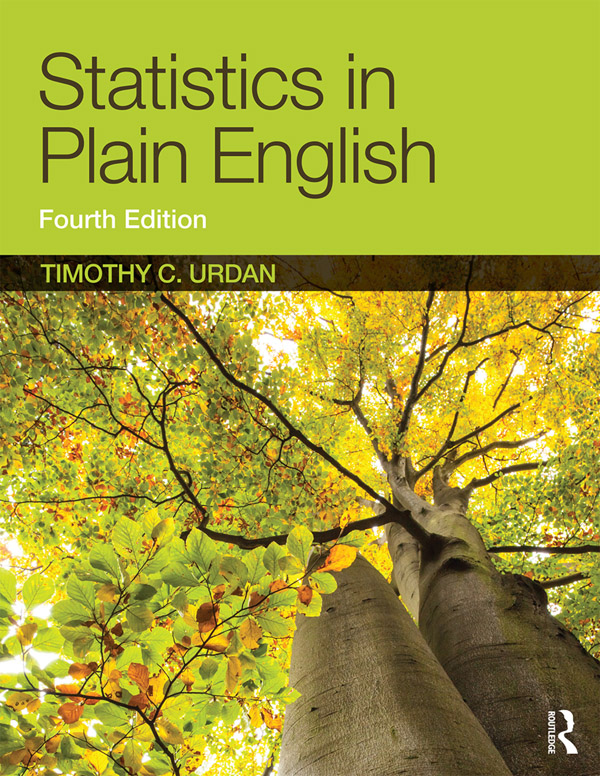
Statistics in Plain English
$16.99
This introductory textbook provides an inexpensive, brief overview of statistics to help readers gain a better understanding of how statistics work and how to interpret them correctly. Each chapter describes a different statistical technique, ranging from basic concepts like central tendency and describing distributions to more advanced concepts such as t tests, regression, repeated measures ANOVA, and factor analysis. Each chapter begins with a short description of the statistic and when it should be used. This is followed by a more in-depth explanation of how the statistic works. Finally, each chapter ends with an example of the statistic in use, and a sample of how the results of analyses using the statistic might be written up for publication. A glossary of statistical terms and symbols is also included. Using the author?s own data and examples from published research and the popular media, the book is a straightforward and accessible guide to statistics. New features in the fourth edition include: sets of work problems in each chapter with detailed solutions and additional problems online to help students test their understanding of the material, new �Worked Examples� to walk students through how to calculate and interpret the statistics featured in each chapter, new examples from the author?s own data and from published research and the popular media to help students see how statistics are applied and written about in professional publications, many more examples, tables, and charts to help students visualize key concepts, clarify concepts, and demonstrate how the statistics are used in the real world. a more logical flow, with correlation directly preceding regression, and a combined glossary appearing at the end of the book, a Quick Guide to Statistics, Formulas, and Degrees of Freedom at the start of the book, plainly outlining each statistic and when students should use them, greater emphasis on (and description of) effect size and confidence interval reporting, reflecting their growing importance in research across the social science disciplines an expanded website at www.routledge.com/cw/urdan with PowerPoint presentations, chapter summaries, a new test bank, interactive problems and detailed solutions to the text?s work problems, SPSS datasets for practice, links to useful tools and resources, and videos showing how to calculate statistics, how to calculate and interpret the appendices, and how to understand some of the more confusing tables of output produced by SPSS. Statistics in Plain English, Fourth Edition is an ideal guide for statistics, research methods, and/or for courses that use statistics taught at the undergraduate or graduate level, or as a reference tool for anyone interested in refreshing their memory about key statistical concepts. The research examples are from psychology, education, and other social and behavioral sciences.Statistics in Plain English 4th Edition by Timothy C. Urdan and Publisher Routledge. ISBNs: 9781317526988, 1317526988. The print version of this textbook is ISBN: 9781138838338, 1138838330.
Be the first to review “Statistics in Plain English”
Related products
Ebook New zetlly
Ebook New zetlly
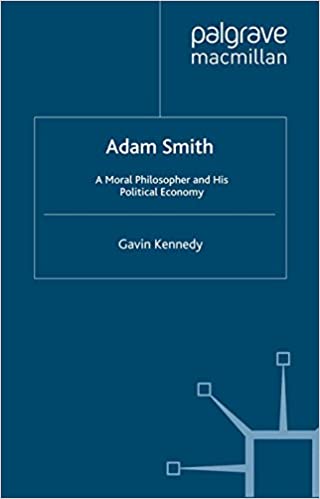
Adam Smith: A Moral Philosopher and His Political Economy (Great Thinkers in Economics)

Ebook New zetlly
Russia, NATO and Cooperative Security: Bridging the Gap (Contemporary Security Studies)
Ebook New zetlly
Ebook New zetlly
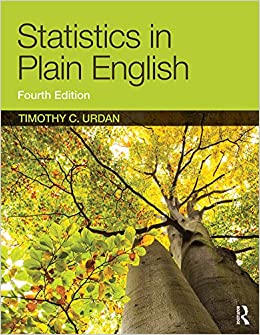
Statistics in Plain English
$15.99
This introductory textbook provides an inexpensive, brief overview of statistics to help readers gain a better understanding of how statistics work and how to interpret them correctly. Each chapter describes a different statistical technique, ranging from basic concepts like central tendency and describing distributions to more advanced concepts such as t tests, regression, repeated measures ANOVA, and factor analysis. Each chapter begins with a short description of the statistic and when it should be used. This is followed by a more in-depth explanation of how the statistic works. Finally, each chapter ends with an example of the statistic in use, and a sample of how the results of analyses using the statistic might be written up for publication. A glossary of statistical terms and symbols is also included. Using the author�s own data and examples from published research and the popular media, the book is a straightforward and accessible guide to statistics. – – – New features in the fourth edition include: – – – sets of work problems in each chapter with detailed solutions and additional problems online to help students test their understanding of the material, – – – – new “Worked Examples” to walk students through how to calculate and interpret the statistics featured in each chapter, – – – – new examples from the author�s own data and from published research and the popular media to help students see how statistics are applied and written about in professional publications, – – – – many more examples, tables, and charts to help students visualize key concepts, clarify concepts, and demonstrate how the statistics are used in the real world. – – – – a more logical flow, with correlation directly preceding regression, and a combined glossary appearing at the end of the book, – – – – a Quick Guide to Statistics, Formulas, and Degrees of Freedom at the start of the book, plainly outlining each statistic and when students should use them, – – – – greater emphasis on (and description of) effect size and confidence interval reporting, reflecting their growing importance in research across the social science disciplines – – – – an expanded website at www.routledge.com/cw/urdan with PowerPoint presentations, chapter summaries, a new test bank, interactive problems and detailed solutions to the text�s work problems, SPSS datasets for practice, links to useful tools and resources, and videos showing how to calculate statistics, how to calculate and interpret the appendices, and how to understand some of the more confusing tables of output produced by SPSS. – – – � – Statistics in Plain English, Fourth Edition is an ideal guide for statistics, research methods, and/or for courses that use statistics taught at the undergraduate or graduate level, or as a reference tool for anyone interested in refreshing their memory about key statistical concepts. The research examples are from psychology, education, and other social and behavioral sciences. – – Product details – – – Simultaneous – Publisher: Routledge; 4 edition (July 25, 2016) – Publication Date: July 25, 2016 – –
Reviews
There are no reviews yet.
Be the first to review “Statistics in Plain English”
Related products

Ebook New zetlly

Ebook New zetlly


Ebook New zetlly
Industrial Process Automation Systems: Design and Implementation ?
Statistics in Plain English
$15.99
Statistics in Plain English is a straightforward, conversational introduction to statistics that delivers exactly what its title promises. Each chapter begins with a brief overview of a statistic that describes what the statistic does and when to use it, followed by a detailed step-by-step explanation of how the statistic works and exactly what information it provides. Chapters also include an example of the statistic (or statistics) in use in real-world research, ‘Worked Examples,’ ‘Writing It Up’ sections that demonstrate how to write about each statistic, ‘Wrapping Up and Looking Forward’ sections, and practice work problems. This 5th Edition features several key additions and changes. First, a new chapter on person-centered analyses, including cluster analysis and latent class analysis (LCA) has been added (Chapter 16). Person-centered analysis is an important alternative to the more commonly used variable-centered analyses (e.g., t tests, ANOVA, regression) and is gaining popularity in social-science research. Next, the chapter on non-parametric statistics (Chapter 14) was enhanced significantly with in-depth descriptions of Mann-Whitney U, Kruskall-Wallace, and Wilcoxon Signed-Rank analyses. These non-parametric statistics are important alternatives to statistics that rely on normally distributed data. This new edition also includes more information about the assumptions of various statistics, including a detailed explanation of the assumptions and consequences of violating the assumptions of regression (Chapter 13). There is more information provided about the importance of the normal distribution in statistics (Chapters 4 and 7). Finally, each of the last nine chapters includes an example from the real world of research that employs the statistic, or statistics, covered in the chapter. Altogether, these improvements provide important foundational information about how inferential statistics work and additional statistical tools that are commonly used by researchers in the social sciences. Statistics in Plain English is suitable for a wide range of readers, including students taking their first statistics course, professionals who want to refresh their statistical memory, and undergraduate or graduate students who need a concise companion to a more complicated text used in their class. The text works as a standalone or as a supplement and covers a range of statistical concepts from descriptive statistics to factor analysis and person-centered analyses.
Reviews
There are no reviews yet.
Be the first to review “Statistics in Plain English”
Related products
Ebook New zetlly
Ebook New zetlly
The Illustrated Network: How TCP/IP Works in a Modern Network

Ebook New zetlly
Ebook New zetlly
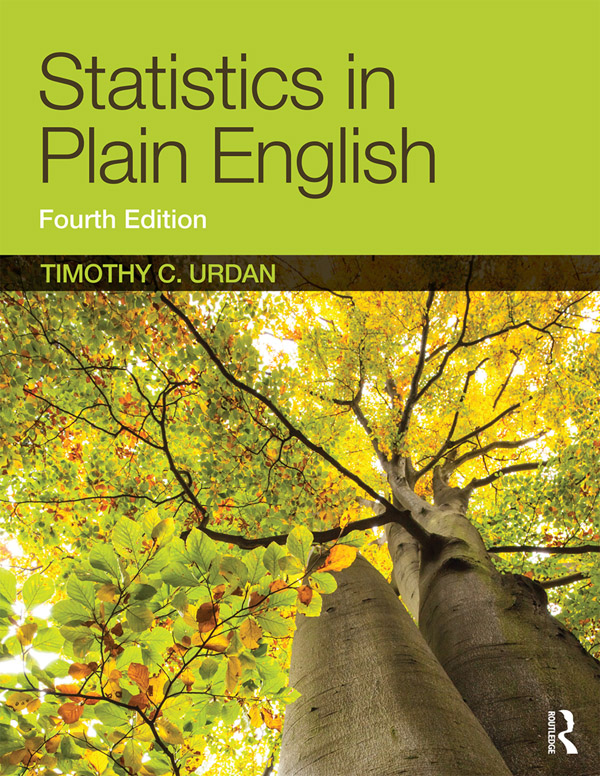
Statistics in Plain English
$21.69
This introductory textbook provides an inexpensive, brief overview of statistics to help readers gain a better understanding of how statistics work and how to interpret them correctly. Each chapter describes a different statistical technique, ranging from basic concepts like central tendency and describing distributions to more advanced concepts such as t tests, regression, repeated measures ANOVA, and factor analysis. Each chapter begins with a short description of the statistic and when it should be used. This is followed by a more in-depth explanation of how the statistic works. Finally, each chapter ends with an example of the statistic in use, and a sample of how the results of analyses using the statistic might be written up for publication. A glossary of statistical terms and symbols is also included. Using the author’s own data and examples from published research and the popular media, the book is a straightforward and accessible guide to statistics. New features in the fourth edition include: sets of work problems in each chapter with detailed solutions and additional problems online to help students test their understanding of the material, new”Worked Examples”� to walk students through how to calculate and interpret the statistics featured in each chapter, new examples from the author’s own data and from published research and the popular media to help students see how statistics are applied and written about in professional publications, many more examples, tables, and charts to help students visualize key concepts, clarify concepts, and demonstrate how the statistics are used in the real world. a more logical flow, with correlation directly preceding regression, and a combined glossary appearing at the end of the book, a Quick Guide to Statistics, Formulas, and Degrees of Freedom at the start of the book, plainly outlining each statistic and when students should use them, greater emphasis on (and description of) effect size and confidence interval reporting, reflecting their growing importance in research across the social science disciplines an expanded website at www.routledge.com/cw/urdan with Power Point presentations, chapter summaries, a new test bank, interactive problems and detailed solutions to the text’s work problems, SPSS datasets for practice, links to useful tools and resources, and videos showing how to calculate statistics, how to calculate and interpret the appendices, and how to understand some of the more confusing tables of output produced by SPSS. Statistics in Plain English, Fourth Edition is an ideal guide for statistics, research methods, and/or for courses that use statistics taught at the undergraduate or graduate level, or as a reference tool for anyone interested in refreshing their memory about key statistical concepts. The research examples are from psychology, education, and other social and behavioral sciences.Statistics in Plain English 4th Edition by Timothy C. Urdan and Publisher Routledge. ISBN: 9781317526988, 1317526988. The print version of this textbook is ISBN: 9781138838338, 1138838330.
Reviews
There are no reviews yet.
Be the first to review “Statistics in Plain English”
Related products
New Book
New Book

Reviews
There are no reviews yet.