
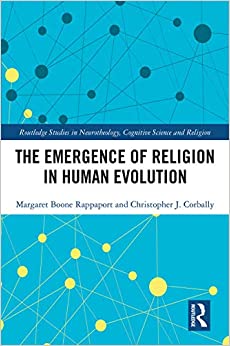
The Emergence of Religion in Human Evolution (Routledge Studies in Neurotheology, Cognitive Science and Religion)
$15.99
Religious capacity is a highly elaborate, neurocognitive human trait that has a solid evolutionary foundation. This book uses a multidisciplinary approach to describe millions of years of biological innovations that eventually give rise to the modern trait and its varied expression in humanity�s many religions. The authors present a scientific model and a central thesis that the brain organs, networks, and capacities that allowed humans to survive physically also gave our species the ability to create theologies, find sustenance in religious practice, and use religion to support the social group. Yet, the trait of religious capacity remains non-obligatory, like reading and mathematics. The individual can choose not to use it. – – – The approach relies on research findings in nine disciplines, including the work of countless neuroscientists, paleoneurologists, archaeologists, cognitive scientists, and psychologists. – – – This is a cutting-edge examination of the evolutionary origins of humanity�s interaction with the supernatural. It will be of keen interest to academics working in Religious Studies, Neuroscience, Cognitive Science, Anthropology, Evolutionary Biology, and Psychology. – – Product details – – – Simultaneous – Publisher: Routledge; 1 edition (December 9, 2019) – Publication Date: December 9, 2019 – –
Be the first to review “The Emergence of Religion in Human Evolution (Routledge Studies in Neurotheology, Cognitive Science and Religion)”
Related products

Ebook New zetlly


Ebook New zetlly

Ebook New zetlly
The Changing Room: Sex, Drag and Theatre (Gender in Performance)

Ebook New zetlly


Ebook New zetlly
Ebook New zetlly
Reviews
There are no reviews yet.