
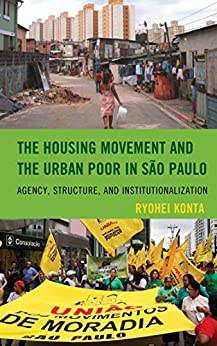
The Housing Movement and the Urban Poor in S�o Paulo: Agency, Structure, and Institutionalization
$28.17
This book explores the ways in which the urban poor population of Brazil participates in social movements. This study focuses on their agency, analyzing the interactive relationship between the urban poor in collective actions and the structural change represented by the participatory administration, which primarily saw implementation and institutionalization in Brazil at the beginning of the 21st century. Ryohei Konta argues that, as the structure of the participatory administration is more actively implemented and institutionalized, social movements will benefit from increased political opportunities. This result encourages the urban poor to participate in social movements as a means to realize their interests. Participation in social movements also stimulates their action with intention and capability (agency), which collectively interacts with the structure of increased opportunities (participatory administration), leading to self-fulfillment and more frequent participation in social movements. Scholars of sociology, Latin American studies, economics, social movements, and urban development will find this book particularly useful.
Be the first to review “The Housing Movement and the Urban Poor in S�o Paulo: Agency, Structure, and Institutionalization”
Related products

Ebook New zetlly
The Oxford Handbook of the History of Communism (Oxford Handbooks)
Ebook New zetlly
The Illustrated Network: How TCP/IP Works in a Modern Network

Ebook New zetlly

Ebook New zetlly
Russia, NATO and Cooperative Security: Bridging the Gap (Contemporary Security Studies)

Ebook New zetlly
The Oxford Handbook of Financial Regulation (Oxford Handbooks)
Reviews
There are no reviews yet.